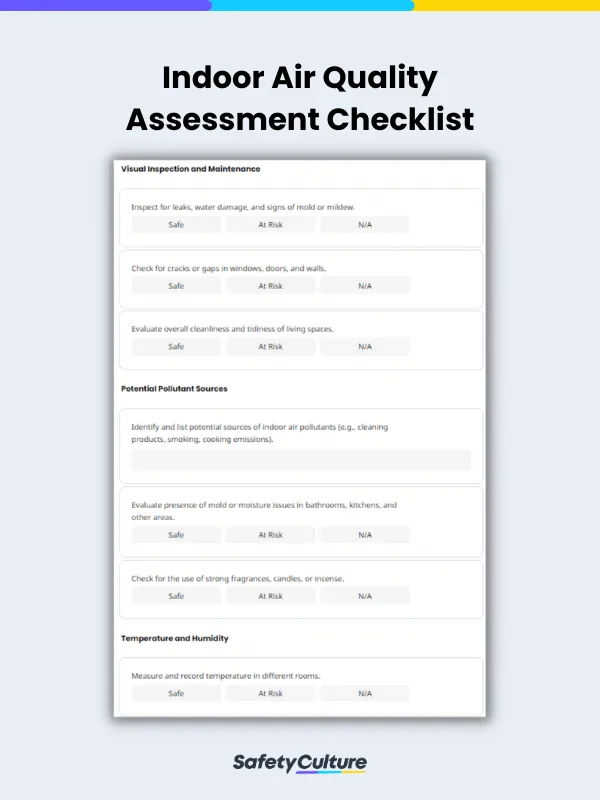
What is an Indoor Air Quality Assessment Checklist?
An indoor air quality assessment checklist is a tool used by building managers, facility managers, homeowners, employers, and environmental health professionals and inspectors to evaluate the quality of the air inside buildings or other enclosed spaces. It includes a series of questions and tasks to identify potential sources of indoor air pollutants, assess overall air quality, and ensure a safe and healthy indoor environment.
Effects of Poor Indoor Air Quality
While indoor air pollutants and their sources may vary, the overall impact on human health remains consistent, regardless of the climate and environmental conditions of a particular country or market. Hence, it’s important to check and comply with laws and regulations related to indoor air quality that are specific to regions or countries.
It’s also essential to note that inadequate air quality assessments, ventilation, and prolonged exposure to indoor air pollutants can lead to a range of health problems such as the following:
Respiratory Irritation and Infections (caused by dust, pollen, mold spores, and pet dander)
Asthma Exacerbation
Eye Irritation
Skin Irritation
Fatigue and Headaches
Volatile Organic Compounds (VOCs)
Cardiovascular Effects
Aggravation of Chronic Conditions
Sick Building Syndrome (SBS)
Reduced Cognitive Function
Long-Term Health Risks
Impact on Vulnerable Populations
Decreased Quality of Life
Benefits of Using an Indoor Air Quality Assessment Checklist
Offering a range of benefits for both individuals and organizations, using a checklist for Indoor Air Quality (IAQ) assessments provides a structured approach to evaluating and improving indoor air quality, which can have significant positive effects on health, comfort, and regulatory compliance. Here are some key benefits:
Healthier Indoor Environment
Improved Air Quality
Enhanced Comfort
Increased Productivity
Regulatory Compliance
Cost Savings
Occupant Satisfaction
Property Value
Data-Driven Decision-Making
What to Include in One
IAQ assessment checklists can have unique features depending on factors such as the type of building (e.g., residential, commercial, industrial), specific environmental concerns, and local regulations.
Even so, this tool must at least include key items related to the following:
Visual Inspection and Maintenance
Potential Pollutant Sources
Temperature and Humidity
Air Filtration and Cleaning
Ventilation and Air Exchange (including the assessment of Heating, Ventilation, and Airconditioning (HVAC) systems and their different types)
Occupant Activities
Recommendations and Action Steps
Guide on Creating an Indoor Air Quality Assessment Checklist
To be intentional in using a checklist when conducting IAQ assessments, careful consideration of various factors and best practices must be done when creating it.
Here’s a quick guide you can use to help you create an indoor air quality assessment checklist:
Determine the scope and purpose of the checklist to ensure the checklist is tailored to the specific environment. Alternatively, you can opt to include a dropdown of multiple-choice items to help the user indicate the facility or building being assessed.
Familiarize yourself with relevant indoor air quality guidelines and regulations from organizations like the Environmental Protection Agency (EPA), World Health Organization (WHO), and local health departments to help you structure your checklist based on established standards. You can also check an EPA indoor air quality checklist for reference.
Divide your checklist into categories that cover different aspects of indoor air quality. This way, you can create a more logical process of IAQ assessments as guided by the checklist.
Incorporate visual inspections and ensure that your checklist emphasizes factors that directly impact occupant health and safety.
Create a flexible indoor air quality inspection checklist that can be adapted to different spaces and situations. Include space for additional notes and comments to account for unique circumstances.
Within each category or assessment item, provide space for recommendations or action steps to guide users on what to do if a potential issue is identified.
As indoor air quality factors and guidelines evolve over time, make sure to regularly review and update your checklist to stay current with best practices and regulations.
How to Use a Checklist for Assessing Indoor Air Quality
Follow these steps to effectively use an indoor air quality assessment checklist:
Start by visually inspecting the area. Look for signs of mold, water damage, leaks, and any potential sources of indoor air pollutants.
Identify and note down potential pollutant sources such as cleaning products, paints, chemicals, smoking areas, and any other relevant factors.
Measure and record the temperature and humidity levels in different areas. Note whether they fall within recommended ranges.
Examine air filtration systems and their cleanliness and functionality.
Check the ventilation systems, HVAC filters, and air vents to assess whether they’re functioning properly and delivering adequate fresh air.
Consider any occupant activities that might contribute to indoor air quality.
If applicable, measure carbon dioxide levels using a monitor to assess ventilation adequacy.
Record your observations, measurements, and any notes on the checklist. Be detailed and accurate in your documentation.
Plan for regular follow-up assessments to track improvements and ensure that indoor air quality is being maintained.
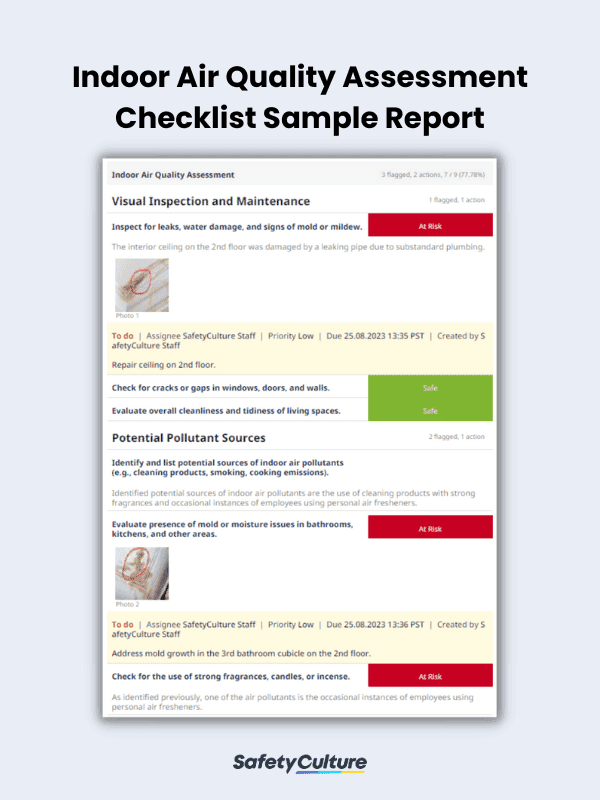
Indoor Air Quality Assessment Checklist Sample Report | Mitti (by SafetyCulture)

Still looking for a checklist?
Search, filter, and customize 60,000+ templates across industries and use cases.