
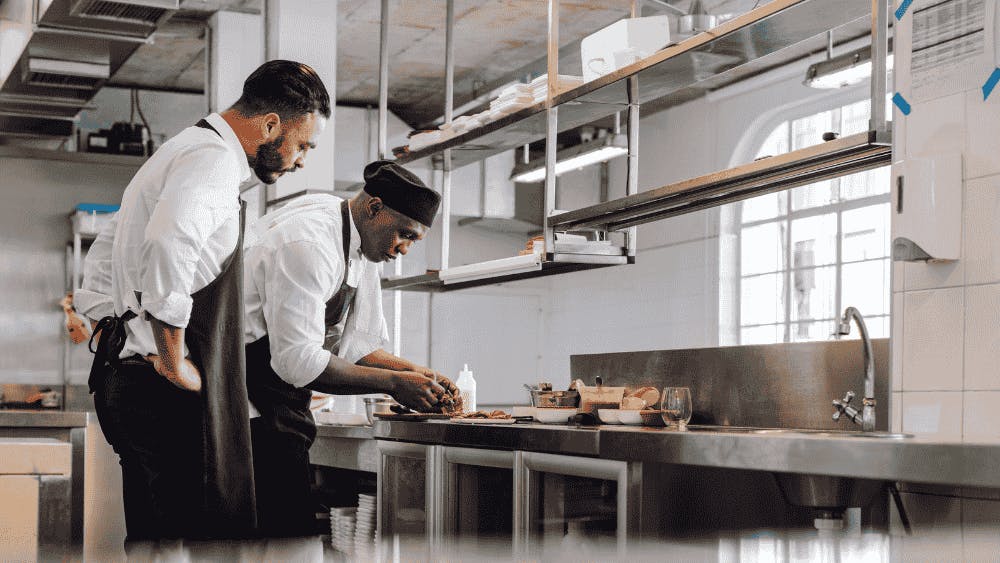





Working in the kitchen demands patience and a diverse set of skills and knowledge. This carefully curated selection of the best kitchen training courses for 2025 will fire up your team’s culinary expertise and train them to prioritize safety.
The restaurant industry ranks third for the frequency of workplace incidents, according to the Bureau of Labor Statistics. This comes as no surprise. Chefs, cooks, and many kitchen workers work early mornings and late evenings in a strenuous, fast-paced environment. They also deal with slippery floors, extreme temperatures, and poor ventilation, all contributing to that statistic.
With such a challenging nature of work, your teams rely on you to help mitigate the risk of workplace accidents and illnesses. Food safety training and certification are extremely important to avoid completely preventable incidents in the kitchen and keep everyone safe in restaurants, hotels, and other food service establishments.
What is kitchen training?
To work effectively in a kitchen environment, employees must possess the skills and knowledge related to cooking techniques, food safety, hygiene, menu planning, and more. Kitchen training is essential to guarantee that your teams are equipped with the expertise to perform their responsibilities in a safe and efficient manner.
How to train people in the kitchen
Working in the kitchen requires a wide array of skills and knowledge. From handwashing to fire prevention, here’s a quick guide on training people in the kitchen, featuring some of the most important restaurant staff training topics:
1. Start with safety and personal hygiene: Train teams on proper handwashing techniques and proper use of hairnets, gloves, and proper clothing. It’s also important to teach them about food storage and cross-contamination prevention.
2. Don’t forget the basics: Give demonstrations on the use of knives, ovens, stoves, and other common kitchen equipment. Include basic maintenance and cleaning for longevity and safety.
3. Train on the fundamental cooking skills: Cover boiling, roasting, grilling, and other methods in your training.
4. Encourage mise en place: Prioritize efficiency and cleanliness by introducing mise en place, the practice of organizing and preparing all the ingredients needed before cooking.
5. Keep your staff well-versed in the menu: Familiarize teams with the ingredients, preparation, and presentation of the food you serve. This will come in handy when guests ask questions, particularly with food restrictions.
6. Make them aware of emergency procedures: Employees should know what to do in case of a burn, allergic reaction, or other emergency cases. They should also be aware of where the first aid kit is located.
Cook with confidence through kitchen training
Keep your kitchen safe and your meals tasty. It’s no secret that keeping a business up and running is a daunting task, that’s especially true in the food service industry. Let your teams ease some of that burden for you with kitchen training.
Make the most out of platforms like Mitti (by SafetyCulture) and choose among their wide range of culinary training courses to keep your staff sharp in the kitchen. As a leader in hospitality skills development, Mitti (by SafetyCulture) can:
Automate compliance training with recurring courses
Help your teams upskill anywhere with mobile learning
Spot problems and track performance easily with reporting and analytics
Work around your kitchen staff’s busy schedule with microlearning
Verify digital training on the kitchen floor with Practical Assessments
From prep to plate, prioritize safety and quality. Explore your kitchen training options with Mitti (by SafetyCulture)!