50+ Safety messages of the day
Workplace safety should always be a priority. These 50+ safety messages and safety tips will help create a safer, more secure work environment.

Workplace safety should always be a priority. These 50+ safety messages and safety tips will help create a safer, more secure work environment.
Safety messages are brief instructions or reminders that provide timely, actionable information about safety risks and hazards. They are intended to raise awareness of potential risks, promote safe practices, and help prevent injuries, illnesses, and fatalities. They are usually posted in public places, especially in work settings as a way to prevent accidents and injuries.
Safety messages are important in any workplace to help keep employees informed of potential hazards and how to avoid them. By communicating safety information, employers can help reduce the number of accidents and injuries that occur in the workplace, whether it’s in an office, a construction site, or a chemical laboratory. Regularly sharing this information also supports ISO 45001 requirements for internal safety communication.
Listed below are safety tips and messages you can share to keep your employees safe when working in various settings and performing first aid during emergencies.
Wear safety goggles – Always wear safety goggles when handling hazardous materials to protect your eyes.
Follow safety procedures – Adhere to all safety guidelines when using power tools to prevent accidents.
Keep work area tidy – Maintain a clean and organized workspace to reduce the risk of trips and falls.
Be mindful – Walk carefully and avoid running to prevent workplace injuries.
Lift heavy objects safely – Use proper lifting techniques to avoid strain or injury.
Secure loose items – Keep jewelry and other loose objects away from machinery to prevent entanglement.
Avoid eating or drinking near hazards – Never eat or drink near hazardous materials to prevent contamination or accidents.
Report safety concerns – Notify your supervisor right away if you spot unsafe conditions.
Wear appropriate work attire – Dress properly for the job, avoiding loose clothing and jewelry that could pose a risk.
Take breaks and stay hydrated – Regularly rest and drink water to maintain focus and energy throughout the workday.
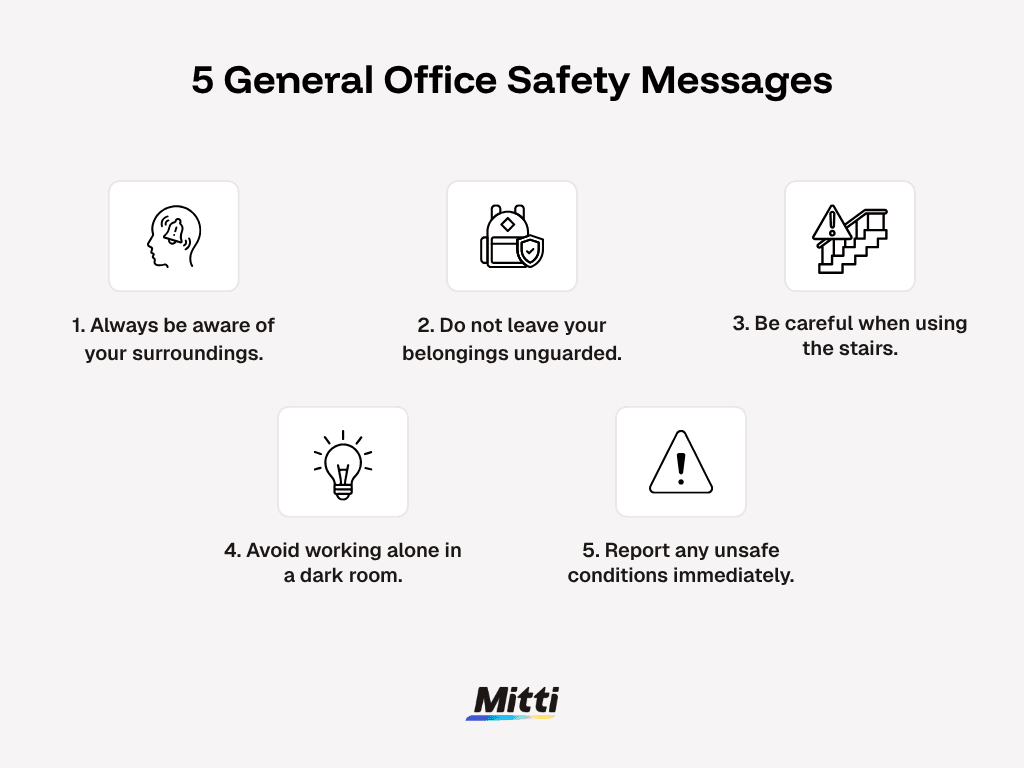
Always be aware of your surroundings.
Do not leave your belongings unguarded.
Be careful when using the stairs.
Avoid working alone in a dark room.
Report any unsafe conditions immediately.
Avoid overloading outlets with plugs.
Keep cords away from heat sources.
Inspect cords for damage before use.
Do not run cords under rugs or mats.
Make sure plugs fit snugly into outlets.
Use caution when plugging in and unplugging appliances.
Do not overload circuits with appliances.
Turn off and unplug appliances in the office when not in use.
Replace any frayed or damaged cords immediately.
If you are ever unsure about the safety of an appliance, do not use it.
This is consistent with NIOSH guidance on reducing preventable workplace injuries.
Follow the fire evacuation plan.
Know the location of the nearest fire exits in case of emergencies.
Keep exit routes clear.
Report any fires or emergencies immediately.
Do not attempt to fight a fire unless you have the proper training to do so.
Use a fire extinguisher only if you know how to operate it safely.
Keep combustible materials away from heat sources.
Make sure your workplace is equipped with smoke detectors and fire alarms.
Test smoke detectors and fire alarms regularly.
Plan and practice a workplace fire evacuation drill at least once a year.
These steps align with OSHA's general industry standards for hazard communication and PPE.
Refrain from eating or drinking in the laboratory.
Always wash your hands before eating, using the restroom, and leaving the laboratory.
Do not touch your nose, mouth, or eyes while working in the laboratory.
Always use personal protective equipment when working with chemicals.
Keep all chemicals in their original containers and clearly labeled.
Never mix chemicals without supervision.
When not in use, always store chemicals in a safe place.
Follow all safety instructions when using chemicals.
In the event of a chemical spill, clean it up immediately using the proper safety protocols.
If you are ever unsure how to handle a chemical safely, ask your supervisor for assistance.
Keep a first-aid kit near your work area.
Learn basic first-aid procedures.
Make sure all first-aid supplies are up-to-date.
Learn how to use the first-aid supplies in your kit.
Bandage any cuts or scrapes.
Apply pressure to a bleeding wound.
Treat a burn with ice or cold water.
Use CPR if someone is not breathing.
Transport an injured person carefully.
Get help immediately if someone is injured seriously.
Wear your hard hat and high-visibility vest at all times on site.
Check scaffolding and ladders for stability before climbing.
Keep walkways and site access roads clear of debris and equipment.
Never work under a suspended load.
Report unsafe excavations or trenches before entering them.
Use fall protection when working at height.
Inspect power tools and cords for damage before each shift.
Follow signage and barriers around active work zones.
Communicate with spotters before reversing or moving heavy equipment.
Store flammable materials away from hot work areas.
A safety message only works if people actually remember it. Keep these in mind when writing yours:
Keep it short – cover one idea per message, not a full briefing.
Make it specific – name the hazard and the action, not just “be careful.”
Use plain language – skip jargon so every reading level can follow it.
Refresh it often – repeat the same line too many times and it stops registering.
Make it visible – post it somewhere people naturally look, and back it up with training sessions so the message sticks.
Repeating the same safety message every week makes it easy to tune out. Build a simple rotation so your team hears something new and relevant throughout the month.
PPE and personal safety – gear checks, fit, and maintenance
Housekeeping and hazard spotting – clutter, spills, and blocked exits
Equipment and machinery – inspections, lockout/tagout, and safe operation
Mental health and wellbeing – fatigue, stress, and speaking up
Rotating through these categories keeps the content fresh without extra planning each week. Pull straight from the industrial, electrical, fire, chemical, and first aid lists above to fill each slot.
There’s no single right channel. The best format depends on how your team works.
Toolbox talks – read a message aloud at the start of a shift, especially on-site
Noticeboards and posters – good for a shared break room or entrance
Email or chat apps – reaches remote and office-based teams directly
Digital signage – displays rotate automatically, with no manual updates needed
Heads Up – push a message straight to your team’s phones and confirm they’ve read it
Whatever you choose, keep it consistent. A message that shows up in the same place, at the same time, sticks better than a one-off reminder.
Mitti (by SafetyCulture) is a workplace operations platform adopted across industries such as manufacturing, mining, construction, retail, and hospitality. It’s designed to equip leaders and working teams with the knowledge and tools to do their best work—to the safest and highest standard.
Efficiently manage and streamline health and safety processes across the organization, including incident management, safety audits and inspections, risk assessment, waste management, and more, using a comprehensive EHS software solution.
✓ Save time and reduce costs
✓ Stay on top of risks and incidents
✓ Boost productivity and efficiency
✓ Enhance communication and collaboration
✓ Discover improvement opportunities
✓ Make data-driven business decisions
In this article