10 electrical safety rules and tips
Follow these 10 electrical safety rules to prevent shocks, fires, and other hazards at work and at home.

Follow these 10 electrical safety rules to prevent shocks, fires, and other hazards at work and at home.
Electrical safety is a general practice of handling and maintaining electrically powered equipment to prevent incidents. Adequate training is required to properly identify and control hazards to keep the environment safe for those around.
Common electrical hazards to be aware of:
Electric shock and electrocution
Electrical fires and explosions
Arc flash and arc blast
Overloaded circuits and short circuits
Damaged or faulty wiring
Additionally, electrical safety rules are a set of guidelines and procedures designed to protect individuals from the hazards associated with electricity in the workplace and other environments.
Whether you’re at work or home, both settings operate on electricity. Here are 10 electrical safety tips to help you avoid electrical hazards:
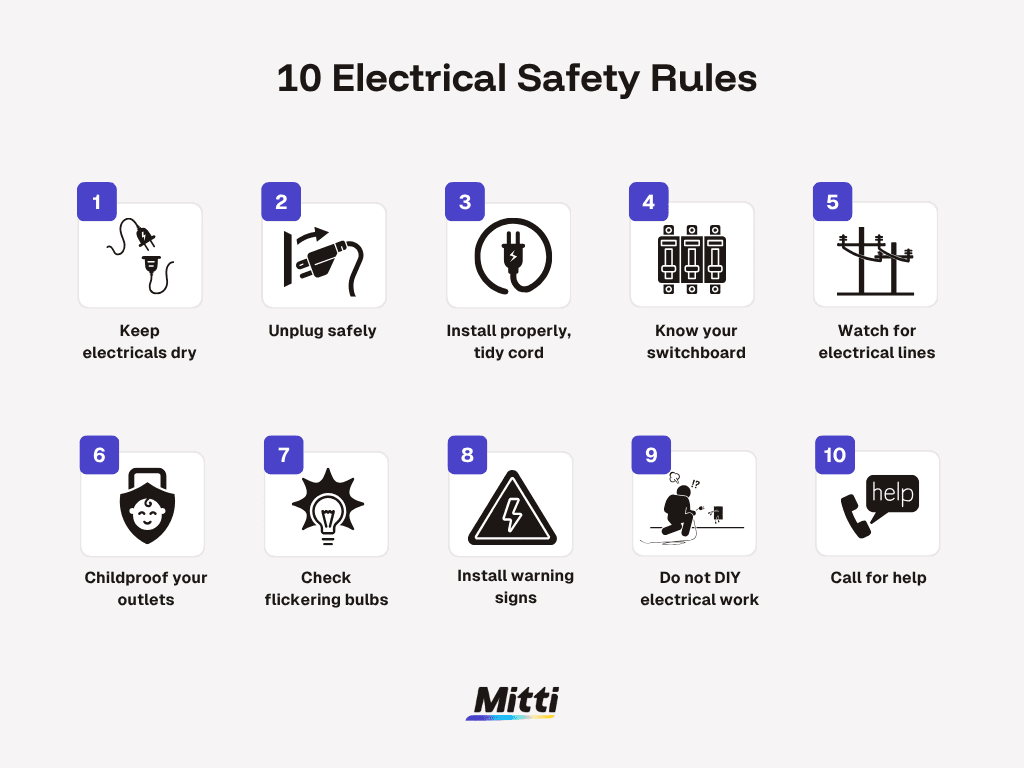
Keep water and other liquids at least 5 feet away from electrical equipment and sources of electricity. For example, keep a mop bucket, a spilled drink, or a garden hose well clear of power strips, extension cords, and outlets. It's recommended to install Ground Fault Circuit Interrupters (GFCIs) in kitchens, bathrooms, and outdoor work areas, since they cut power within milliseconds of detecting a leak and help prevent electrical shock, ground faults, fires, overheating, and damaged wire insulation. NIOSH data shows electrical incidents remain among the leading causes of fatal workplace injuries each year.
When disconnecting electrical equipment, gently pull it by the plug instead of jerking the electrical cord. Pulling by the cord, like yanking a toaster or a power drill free by its cable, can loosen the internal wiring at the plug and expose bare wire over time. Grip the plug itself, give it a firm but gentle pull, and check it for looseness or heat damage before you use it again.
Good electrical installation keeps fixed equipment and electrical cords out of the way and out of reach of pets that can chew on them. Route cords along walls or under cable covers rather than across walkways, where foot traffic can fray the insulation and create a trip hazard.
In workshops and warehouses, cable reels or wall-mounted hooks keep cords off the floor, and at home it helps to avoid running an extension cord under a rug where damage can go unnoticed. Replace any cord with cracked or exposed insulation right away rather than taping over it, and flag it during your next safety audit so it doesn't get missed.
A switchboard protects and isolates you from electrical current, dividing and distributing power to different parts of your site. Make sure incoming power matches what the switchboard is rated to distribute. Plugging a high-draw appliance, like a commercial oven or several space heaters, into a circuit built for office equipment can overload it and cause overheating that leads to electrical fire. Get your switchboard inspected annually as part of a broader safety audit checklist, and call a licensed electrician sooner if you notice buzzing, warm switches, or a burning smell.
Be aware of power lines before climbing a tree or a ladder, and especially when working at height. A metal ladder, an aluminum gutter, or even a tree branch brushing against an overhead line can carry enough current to cause a fatal shock, since electricity can arc across a small gap without direct contact.
Keep at least 10 feet of clearance from power lines when trimming trees, cleaning gutters, or working on a roof, and make line clearance part of every construction site inspection. Treat any downed line as live until a utility crew confirms it's been de-energized.
Match your PPE to the arc-flash risk category before working near live equipment. Insulated gloves and flame-resistant clothing aren’t optional extras: a worker opening a live switchboard panel without an arc-rated face shield and insulating gloves risks severe burns if an arc flash occurs, even during a routine task like checking a breaker.
In the US, NFPA 70E sets out the PPE categories and arc-flash boundaries you need to check before touching energized equipment. Keep your PPE in good condition and replace gloves or face shields the moment you spot a tear, crack, or burn mark.
Have flickering lights checked and fixed, since it can be caused by a loose connection, a failing switch, or a bulb that needs to be reseated or replaced. A flickering overhead light in an office or warehouse aisle can point to a loose wire nut in the junction box or a fixture drawing more current than the circuit is rated for.
Don't just swap the bulb and move on: repeated flickering in the same fixture is often an early warning sign of arcing. ESFI reports that electrical failures and malfunctions cause thousands of home and workplace fires every year, often starting with symptoms this simple. If reseating the bulb doesn't solve it, have an electrician check the wiring before the fixture is used again.
Use clear, visible signs wherever there’s high voltage nearby that people need to be warned about. Post signage at eye level on switchboard doors, transformer enclosures, and any panel where exposed conductors sit behind a cover, so anyone opening it knows to expect a hazard before they touch anything.
Color-coded labels, like yellow-and-black high-voltage tags, help workers in a warehouse or plant recognize the risk at a glance, even from across the room. Replace faded or damaged signage promptly, since a sign nobody can read offers no protection at all.
Before servicing or repairing equipment, isolate the power source and apply lockout/tagout devices so it can’t be re-energized while someone’s working on it, in line with OSHA's lockout/tagout standard (29 CFR 1910.147). For example, before a technician reaches into a conveyor motor housing or a control panel to clear a fault, they should de-energize the circuit, lock the disconnect switch in the open position, and tag it with their name so no one else can restore power.
A second worker should verify the equipment is de-energized with a voltage tester before any hands go near exposed conductors, and electrocution risk should be flagged as part of every job safety analysis. Skipping this step is one of the most common causes of serious electrical injuries, and it's just as important on a five-minute fix as it is on a full shutdown.
In case of an emergency, don’t hesitate to call the emergency services who will talk you through how to safely assist in the situation until help arrives. If someone is in contact with a live source, don't touch them directly. Cut the power at the switchboard first, or use a dry, non-conductive object like a wooden broom handle to separate them from the source if the power can't be cut quickly. Call for help immediately even if the person seems alert, since injuries like arrhythmia or internal burns aren't always obvious right away.
Mitti (by SafetyCuluture) is a workplace operations platform adopted across industries such as manufacturing, mining, construction, retail, and hospitality. It’s designed to equip leaders and working teams with the knowledge and tools to do their best work—to the safest and highest standard.
Efficiently manage and streamline health and safety processes across the organization, including incident management, safety audits and inspections, risk assessment, waste management, and more, using a comprehensive EHS software solution.
✓ Save time and reduce costs
✓ Stay on top of risks and incidents
✓ Boost productivity and efficiency
✓ Enhance communication and collaboration
✓ Discover improvement opportunities
✓ Make data-driven business decisions