
How to conduct a fire drill
Follow this step-by-step guide to plan, run and review a fire drill at work, plus what the law says in the US, UK, Australia and EU.
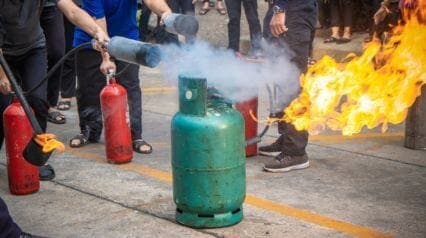
Follow this step-by-step guide to plan, run and review a fire drill at work, plus what the law says in the US, UK, Australia and EU.
A fire drill is a rehearsed evacuation that teaches people what to do when a fire starts. It helps everyone leave quickly, calmly and safely, and shows you where your plan needs work.
Fire drills turn your evacuation plan into something people can do without thinking. When the alarm sounds, your team already knows the exits, the assembly point and who’s in charge.
Regular drills also:
Cut panic, because the route feels familiar
Expose blocked exits, weak alarms and gaps in your plan before a real fire does
Give you a record to show inspectors and insurers
Fire drill rules depend on where you operate. In many places, the law requires an emergency plan and a code, standard or guidance sets how often to practice it. Check your local rules first.
When an OSHA standard requires an emergency action plan, 29 CFR 1910.38 says it must cover evacuation procedures, exit route assignments and a way to account for everyone afterward.
OSHA doesn’t set a drill schedule. Your local fire code usually does, often through NFPA 101, which sets intervals by building type.
You must also train the people who help others evacuate.
The Regulatory Reform (Fire Safety) Order 2005 covers England and Wales. Your local Fire and Rescue Service enforces it.
Fire safety guidance says to run at least one fire drill a year and record the results.
Regulation 43 of the model Work Health and Safety Regulations requires an emergency plan that covers evacuation and how often you’ll test it (Safe Work Australia).
The AS 3745:2010 standard calls for at least one full evacuation exercise a year.
Each state and territory has its own fire agency. In New South Wales, that’s Fire and Rescue NSW. In Victoria, it’s the Metropolitan Fire Brigade and the Country Fire Authority, depending on location.
The EU’s Framework Directive 89/391/EEC requires employers to take measures for first aid, fire-fighting and evacuation. Each country sets its own drill rules, so check national law.
Run every drill the same way so you can compare results over time. How often depends on your local rules and your risk. Many workplaces run at least one a year, and higher-risk sites run more.
Plan the drill. Set the date, scope and scenario, and pick observers to time the evacuation and note problems.
Brief your team. Cover exit routes, assembly points and who does what, including fire wardens and anyone helping people who need support.
Sound the alarm. Start the drill with your real alarm so people learn what it sounds like and when to move.
Evacuate. Everyone leaves by the nearest safe exit, without stopping for belongings or using elevators.
Gather and count. Wardens take a headcount at the assembly point and check no one’s missing.
Give the all-clear. Only let people back in once the person in charge confirms the drill is over.
Debrief and record. Note evacuation time, problems and fixes, then update your plan.
Only trained people should use fire extinguishers, in a drill or a real fire. Need the full list? Use our fire drill checklist to cover every step. For more on keeping people safe, see our guides on fire safety and fire safety in the workplace.
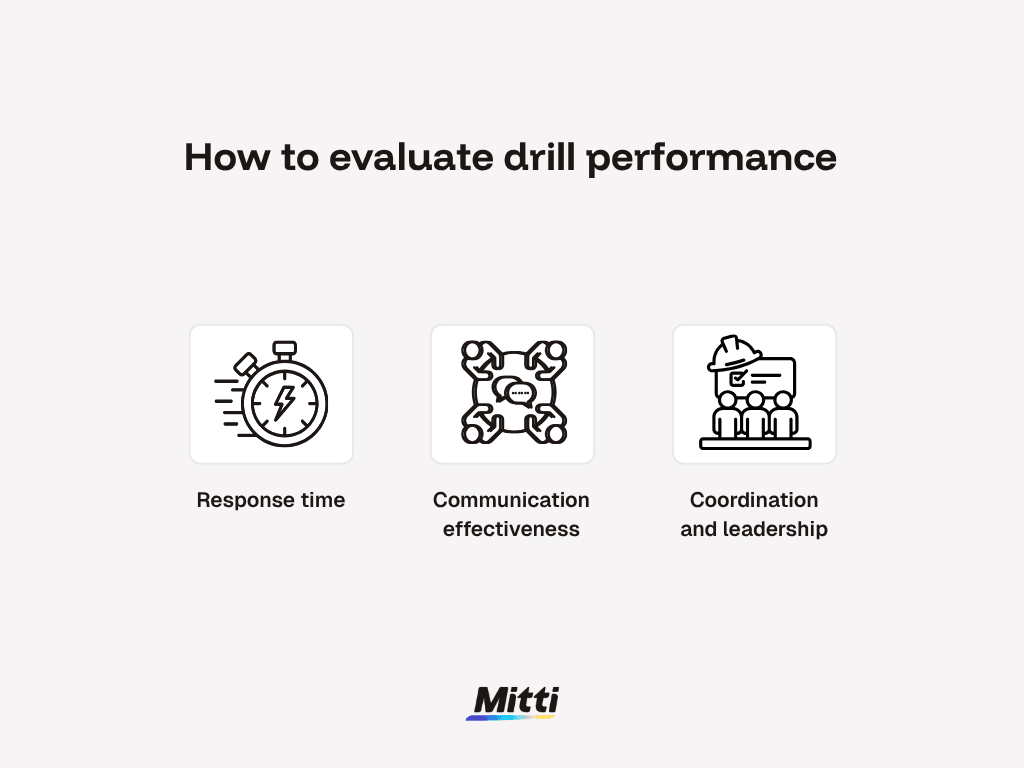
Judge each drill against clear measures, then fix what you find.
Response time: How long did everyone take to reach the assembly point? A shorter time means people know the route.
Communication: Could everyone hear the alarm and follow instructions? Check alarms, intercoms and warden messages.
Coordination and leadership: Did wardens guide people to safety and take a headcount?
A good fire drill report includes:
Date, time and type of drill
Number of people who took part
Total evacuation time
Problems found, like blocked exits or alarms people couldn’t hear
Actions, with an owner and a due date for each
Use the results to update your fire safety plan. If drills show gaps, you may need more training, restocked extinguishers or a clearer evacuation route.
Run every fire drill on schedule, capture what goes wrong and turn it into a clear fix. Mitti helps your team do it the same way at every site.
Mitti is the operations system for every site, shift and standard. It helps your team:
See what’s happening across every site and shift, as it happens
Turn every issue into a clear next step with an owner and a deadline
Stay on top of standards with digital checklists and an audit trail that builds itself
Improve every day with evidence from the people doing the work
Everything your team captures becomes insight you can use to get better every day.