A guide to management training and development
Success in any industry depends on good managers who can drive high-quality work and performance out of their team. But, excellent leaders don’t just come from anywhere; you must equip and upskill them to reach that level. And that’s why you need management training and development.
Effective management training and development takes a lot of effort to deliver, but we’re here to help you optimize that. For this article, we’ll be guiding you through the best steps to develop impactful managerial training, as well as its definition and benefits.
Management training and development equips managers with the knowledge, abilities, and strategies to effectively lead teams in accomplishing business goals. It’s an upskilling process that delivers the necessary technical insight and human qualities for leaders to grow.

Management development training uses different learning methods, like formal seminars, elearning courses, and simulations. With these strategies, current or potential managers learn to control their team’s competitiveness and adaptability to the business.
Offering your leaders training in management can deliver several benefits that’ll improve your business's abilities, culture, and bottom line. Here are the main advantages:
A good training and development program naturally improves the managerial qualities of your team heads. Managers get to learn strategies and frameworks that help them analyze and resolve business problems well.
Upskilling your managers can improve their leadership skills to be impactful. This lets them motivate and engage their members better in driving team success. In training, they can also learn to manage individuals and conflicts well by developing their social and communication skills.
Development and training in management can transform your managers into adaptable leaders who can achieve success, no matter the conditions. In addition, upskilling your leads equips them to optimize team performance, which boosts their productivity.
Training your managers gives them the chance to improve their communication and persuasion skills. In doing so, they learn to create stronger connections between their members who embrace each other’s dynamic and quality. This builds a unified department and a connected company.
Excellent management development lets you create managers who can inspire trust and belief within their members. This boost in morale motivates your employees to stay in the company. As a result, you gather strong leaders and an experienced workforce.
There are several types of training and development for members in management. Each kind covers different topics, qualities, and expertise for managerial excellence. Here are the most common types:
Team leadership training develops your managers' abilities to inspire, engage, and guide their members toward their best performance. In this type of management training, team heads learn mentoring, decision-making, and feedback-delivery skills.
Common topics
Establishing a culture of innovation and improvement
Leadership styles and methods
Effective team communication
Recommended training courses to use for Team leadership
Project management training communicates to your managers the best methods and techniques that’ll successfully complete business activities. Generally, this training type helps team leads guide, supervise, and execute their assignments.
Common topics
Critical thinking and problem-solving
Project plan, timeline, and resource distribution
Innovation and frameworks
Task delegation
Recommended training courses to use for Project management
Performance management training, meanwhile, teaches your managers the right strategies to drive team productivity and processes. The management training type guides leaders on how to tap into and maximize the potential of their members.
Common topics
Goal setting
Performance evaluation and feedback
Communicating advice and criticism
Coaching
Recommended training courses to use for Performance management
Client management training prepares your organization’s managers to create positive client interactions and relationships. It’s a critical type of managerial learning as it builds skills to generate business leads and attain customer loyalty.
Common topics
Relationship building
Client service
Handling client deliverables
Damage and legal prevention
Recommended training courses to use for Client management
Next is management development in assessing business risks and strategies. This kind of training develops your managers' strategic thinking and resilience to minimize risks in their business decisions. Here, they learn to evaluate and adapt to the factors that can compromise productivity and bottom lines.
Common topics
Risk assessment and prevention
Anticipating market problems affected by environmental, economic, and governmental sectors
Health and safety compliance
Financial projections
Recommended training courses to use for Business risks and strategies
Soft skills and relations, on the other hand, help managers strengthen their relationships with members. Leaders can learn how to develop collaboration, honesty, and empathy for a positive team culture.
Common topics
Personality development
Social graces and boundaries
Establishing rapport
Active listening skills
Recommended training courses to use for Soft skills and relations
Lastly, there’s conflict resolution. This type of management training teaches managers to deal with team tensions and disagreements in a productive manner. It trains them to address disputes while maintaining an understanding of those involved.
Common topics
De-escalation
Conflict prevention
Handling and ending disputes
Workplace empathy
Recommended training courses to use for Conflict resolution
With the right steps and the best practices, your management training and development program can be impactful, engaging, and cost-effective. In order to maximize your efforts and resources, try and follow these steps and develop exceptional managers:
Your first step is to identify the challenges and demands your managers face by conducting a needs analysis. This form of assessment allows you to understand your managers’ current concerns and skill levels, and evaluate how training can improve them.
Through this process, you should find the skill gaps, weaknesses, and problems among your managers. Then, you compare these challenges with your organization’s goals. After that, consider which of these management issues should be resolved by training to help accomplish your business’s targets.
By assessing your training needs, you make sure that the program develops managers who can support the business’s goals.
After finding the needs of your managers and the business, the next stage is to create specific and concrete training objectives based on your priorities. This is when you determine the learning outcomes and accomplishments you want by the end of the program.

Your training objectives should include immediate results like:
The topics and content to learn
The qualities and skillsets to gain
The practices and processes to adapt
Besides that, your learning and development goals should also specify long-term management results, including key performance indicators such as:
Engagement rate of team members
Turnaround time
Leadership behavior changes
Work satisfaction rates
Your organization’s executives have an influential voice that can build engagement and improvement with your management learners. More than anything, winning their participation adds irreplaceable insight and lessons to your training and development.
Executive involvement should go beyond their approval of resources. Ideally, you could consult them on the right manager training topics and courses to include. Better yet, invite them to be mentors or speakers and take advantage of their unique leadership experience.
After finishing the previous steps, you now have the right ideas to design and structure your manager training plan. In this stage, you can build your program by choosing the right strategies, materials, and activities to support your needs and objectives.

There are many elements to consider when creating your program. So here are the essential parts that your plan must have:
The logical sequence of topics and courses
The training timeline
The different methods of training and development, like room discussions, group learning, job shadowing, eLearning courses, demonstrations, simulations, and interaction
The assigned subject matter experts (SMEs), facilitators, and trainers
The key learner milestones and achievements
The engagement methods to boost participation and retention
It’s also important that you balance learning theories with practical applications when building your training plan. This makes sure your program can develop learners into well-rounded and well-skilled managers.
Organizing and facilitating management training can be very demanding, and you may not have all the time and resources for it. An easy way to handle that is by using a training platform like a learning management system, course platform, or central knowledge base.

These digital training programs, like Mitti (by SafetyCulture), are practical tools that help you create, publish, track, and evaluate development for managers. These online learning platforms let you use features like course and quiz builders, user assignments, and training data for upskilling team heads and leaders.
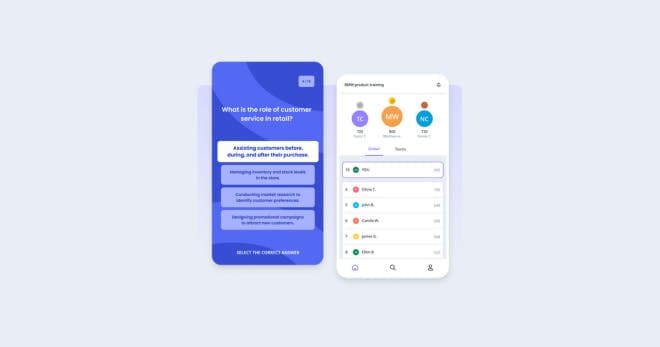
Deliver highly efficient management training and development. Sign up for Mitti (by SafetyCulture) today!
Once you implement your managerial learning and development program, it’s important to consistently track, assess, and review your learners’ progress. As you monitor and document training completion, you get to follow each trainee’s improvement.
More importantly, keeping an eye on your learners’ progress helps you find issues and completion gaps that need to be addressed. This allows you to adjust your training plan as soon as possible, letting you retain the effectiveness and impact of management learning.
As you close your learning program, the next step is to evaluate training for its results and impact. In connection with your objectives, it’s important to assess the effectiveness of training using short- and long-term measures.
By evaluating both standards, you can determine whether your training program meets your organization’s immediate needs and extended goals.

Right after your program, be sure to evaluate the following:
Achievement of key performance indicators
Completion and understanding of key topics and skills
Feedback from trainers and learners
After some time, come back to assess the continuous impact of the program through:
Employee engagement, retention, and satisfaction rates
Working culture
Manager evaluations
Productivity improvements
Output quality
Workplace learning and development shouldn’t just happen during training periods. Similarly, career growth and upskilling aren’t only for managers. Everyone in your organization always has something to improve, optimize, and learn - no matter the position or season.
That’s why promoting a culture of learning is important for your business. When all members are encouraged to develop their skills - expertise, productivity, and bottom lines grow connectively.
One way to build this is through the managers you train. By delivering managers continuous and supportive learning outside of training programs, you help them understand the value of ongoing growth. This leads to a cultural change driven by leaders who motivate members, like themselves, to learn.
Management training equips present and future managers with the necessary skills to lead their teams and achieve business goals. But, it’s a difficult program to create with so many topics to cover, skills to assess, and learners to track.
That’s why you need a reliable learning platform, like Mitti (by SafetyCulture). It’s an easy-to-use system that helps you deliver efficient and impactful management training and development.

First things first, Mitti (by SafetyCulture) helps you prepare and publish powerful managerial courses in minutes, using their Creator tool. This content builder features a quick drag-and-drop tool and a powerful AI generator, as well as interactive templates that make courses highly engaging and easily retainable for learners.
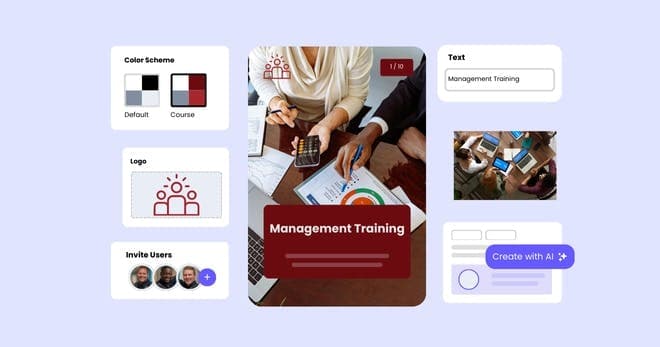
Second, the platform allows you to assess and track your learners’ management knowledge in one place. With the platform’s Blended Learning, you can seamlessly combine online and in-person learning - no extra tools or effort necessary.

And the best part is that you can manage all this content and these assessments without needing more admin work. Mitti (by SafetyCulture) helps you organize managerial learning through its User Group feature. This tool lets you assign and structure learners with one click, making sure you deliver the right training to the right people.
Easily organize and manage effective management training and development. Sign up for Mitti (by SafetyCulture) today!