
Site preparation: what you need to know
Learn the process of site preparation, its benefits, and its applications in construction.

Learn the process of site preparation, its benefits, and its applications in construction.
Site preparation is the process of preparing the site for future construction work. This involves clearing the construction site, grading the land, and compacting the soil. It’s a critical step in the construction process as it lays the groundwork for a successful and safe construction project. Without proper site preparation, the construction work will be of poor quality and will not meet the required standards.
It’s important to consider the site preparation that will be required when embarking on any construction project. This is especially true for larger projects, such as building a new home or office, where it typically involves clearing the site of any debris, grading the land, and leveling the ground. Preparing a site also helps with:
Ensuring that the construction site is safe and ready for the work to begin.
Minimizing the impact of the construction work on the surrounding environment.
Expediting the construction process by making it easier to access the construction site and by making it easier to move materials around the site.
Whether you are planning a small or large construction project, it’s essential to undergo the process of site preparation.
There are several considerations when preparing a construction site, since each site has its own unique requirements. Here are some of the key essential factors to consider:
The Nature of the Project: The type of construction project plays an important role in determining the level of site preparation required. For example, a residential development generally involves less extensive groundwork, while commercial and infrastructure projects typically demand significant site preparation due to their larger scale and complexity.
The Size of the Project: As the size of the project increases, so does the complexity, time, and resource investment needed to ensure proper site readiness. Smaller projects generally require less groundwork, fewer resources, and shorter prep time, while large-scale developments demand more planning, heavier equipment, and additional labor to accommodate the broader site requirements.
The Location of the Construction Site: Location is also a crucial factor in shaping the site preparation process, as each factor presents its unique challenges and requirements, such as the site’s setting, regional climate, and accessibility to infrastructure and resources.
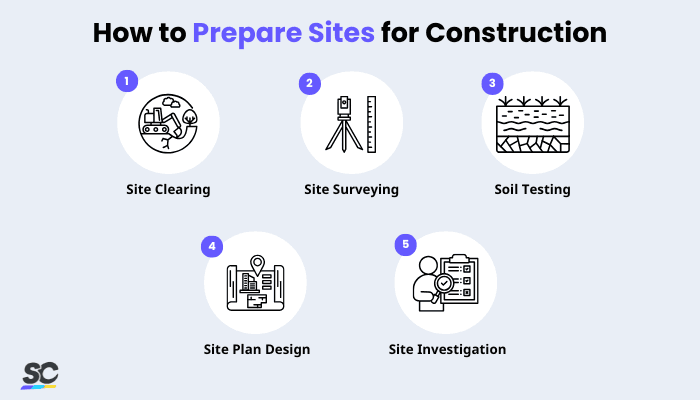
Below is the step-by-step process to help you with your site preparation:
The first step in any site preparation is site clearing. This process involves removing any trees, vegetation, debris, or other obstructions from the construction site. This is usually done with heavy machinery such as bulldozers and excavators.
In this step, a team will survey the land to determine the best way to lay out the construction site. Site surveying is an essential step as it is required for zoning and permitting processes. This includes determining the boundaries of the site, where to place buildings and other structures, and how to best connect utilities.
Soil testing is an essential process wherein the soil type is determined. This information is important as it will help determine the type of foundation that needs to be used for the construction project. This process is typically done by acquiring a sample from a borehole or pit, after which the sample is sent to a laboratory for analysis.
After soil testing and installing all drainage and septic tanks, site planning is the next step in the site preparation process. Pipes, plumbing systems, and other fixtures must be carefully designed to prevent disorganization during construction. Understanding what works underground is essential because it can be altered by conditions like rock formations, making an efficient site plan crucial when carrying out construction work.
Finally, the last step is site investigation, where all required data about the proposed site’s rock, soil, and groundwater conditions are collected. In this step, the inspector will be able to determine if the site is good for construction. Once all the necessary site inspection information is obtained, inspectors can estimate the cost and identify the methods to be used for the building project.
To ensure effective site preparation during the construction process, here are some tips to help you:
Enhance On-Site Safety Protocols: It’s crucial to review and update safety guidelines before starting a construction project. Doing so will help protect workers, prevent accidents, and comply with site safety regulations.
Implement a Construction Plan: A construction plan will help organize the construction site and ensure that all work is completed efficiently.
Conduct a Soil Test: A soil test will help determine the type of soil present on the construction site. This information can be used to determine the best way to prepare the site for construction.
Choose the Right Equipment: The type of equipment used for site preparation can vary depending on the size and scope of the project. It’s important to select the right equipment for the job to ensure that the work is completed safely and efficiently.
Get Your Crew Ready: Your crew is the backbone of everything to get it completed on the construction site. Make sure that everyone is properly trained and aware of the construction process.
Monitor the Weather: The weather can have a major impact on the site preparation process. Monitor the forecast and adjust the construction schedule accordingly.
Construction site preparation covers a lot of ground: clearing, grading, utilities, drainage and access. Each step produces inspections, issues and sign-offs, and they’re easy to lose before the main build starts.
An operations system like Mitti (by SafetyCulture) has a construction module with two features. Project overview files every inspection, action and issue against the job, and shows every job in a grid, a hierarchy or on a map. Sign On records who is on site. Open a project at the start of the job and its record stays with it as the work moves on, so nothing gets lost between phases. On commercial site prep, where several crews work at once, that shared record matters even more.
Check that someone has located and marked underground services before anyone digs.
Check ground conditions and that water drains away from the work area.
Confirm erosion and sediment controls are in place before clearing starts and check them after rain.
Check site boundary fencing, signs and gates.
Confirm the required permits are on site.
Start with a free template, such as the Project and Site Inspection Checklist or the HB Projects Pre-Start Initial Site Survey.
Trucks, machinery operators and subcontractors arrive well before the build starts. Set up site access control on day one with Sign On , the second feature in the construction module. Workers, visitors and subcontractors sign on with a QR code on their own phone or at a site kiosk, and you can require a site induction first. Visitors don’t need a Mitti account.
Mitti is the operations system for every site, shift and standard. Trusted by over 80,000 organizations, Mitti brings your people, operational data and workflows into one operating picture.
Keep your projects moving without the paperwork. Your teams flag hazards the moment they happen, so you can see safety across every project.
✓ See what’s happening across every site and shift
✓ Catch issues the moment they happen
✓ Turn every issue into a clear next step
✓ Improve every day with evidence from the people doing the work
Article by
Mitti (by SafetyCulture) Content Team
Mitti (by SafetyCulture) Content Contributor
View author profile