10 Forklift safety statistics for 2025
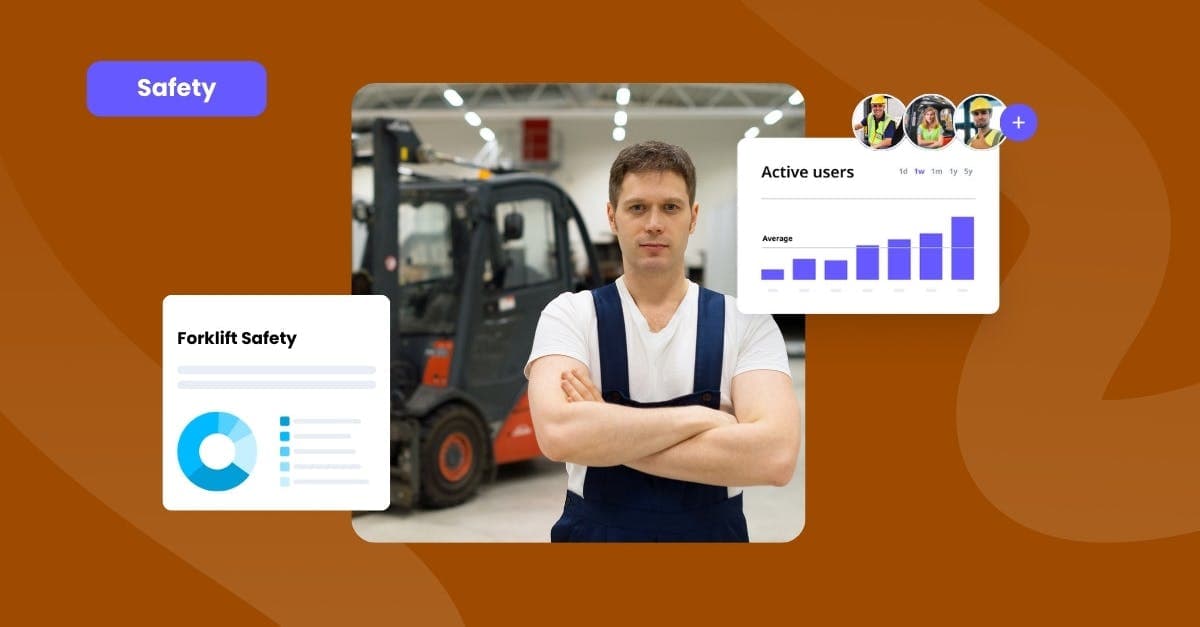
Forklift safety statistics encompass the data, rates, and metrics highlighting the occupational issues related to forklift operations. These figures reveal various measurements and patterns that define the causes, frequency, and severity of forklift incidents.
Conclusions drawn from these statistics can help you understand the importance of effective forklift operator training, protocols, and measures for production floor safety. They offer industrial facts and trends to guide your decisions in implementing forklift policies and protecting workers’ well-being.
We’ve collected essential forklift safety facts that you must know to promote secure and efficient equipment use. These cover common incident outcomes, their effects on operations, and strategies for mitigation.
These are the latest figures at the time of writing.
The National Safety Council (NSC)’s most recent report reveals that 67 forklift incidents resulted in occupational fatalities. Similar documents show that these grave consequences were typically caused by:
Vehicle or falling object strikes
Falls
Pedestrian collisions
Non-transport cases such as carbon monoxide poisoning, entrapment, and fires.
Given that forklift fatalities range from 75 to 100 annually, this indicates a slight safety improvement. However, as long as lives are at stake, there is still a long way to go in securing the safety of forklift operators and those around them on factory floors.
Reported forklift fatalities indicate the high-risk nature of these operations. This is why rigid policies, supported by comprehensive forklift training and awareness courses, are crucial in production plants.
A total of 40,513 forklift-related incidents led to days away from work, job restrictions, and turnover, according to the Material Handling Equipment Distributors Association (MHEDA). To break it down, here’s what each consequence means:
Days away from work (DAFW) are periods spent absent from the job for recovery.
Job restrictions are instances where your workers can’t work at full strength due to injuries. As a result, it reduces the tasks they can complete.
Turnover refers to employees who decide to transfer due to the effects of the accident they experienced.
If left unaddressed, these safety repercussions can compromise your assembly line’s performance and morale, limiting productivity and delivery.
Not to mention, missed employee time and recruitment are costly, which adds to your company’s expenses. So, forklift issues are both a safety problem and a financial strain.
We’ve mentioned earlier just how crucial complete safety measures are to your team’s health. To illustrate this importance, the Occupational Health and Safety Administration (OSHA) has found that 70% of forklift incidents could have been prevented with better safety strategies.
Their study concluded that most of these accidents and physical damages were due to teams lacking risk awareness and tending to operate trucks irresponsibly.
Because of this, organizations must take the necessary steps to protect their teams and equip them with the required knowledge and skills. Here are essential forklift safety tips for your business to thrive:
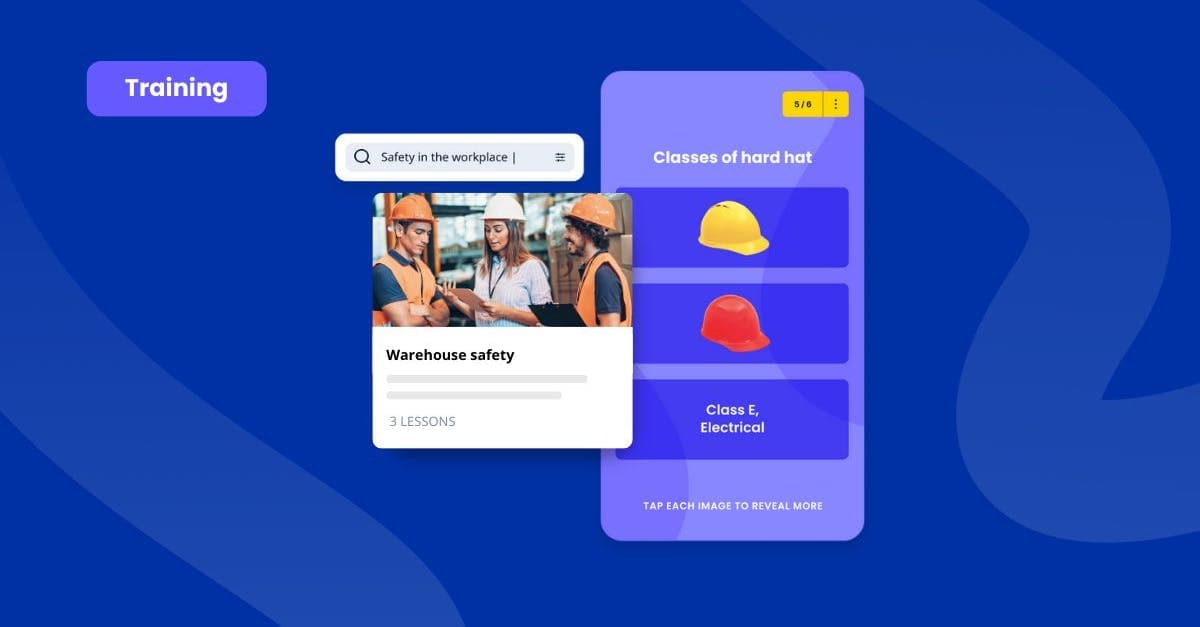
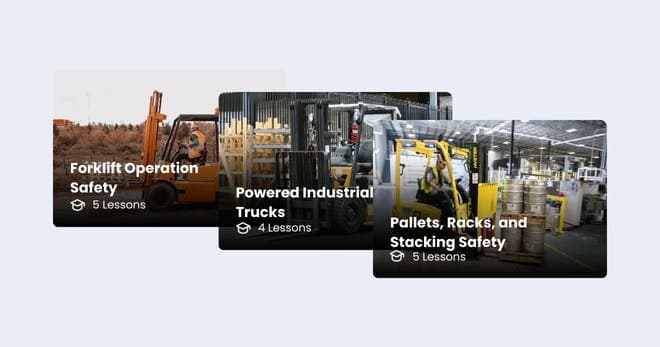
Deliver forklift operator training and refresher courses like Mitti’s Forklift Operation Safety. The training material covers the key responsibilities and standard procedures for forklift operations. Lessons include maintenance routines, pre-work inspections, and risk assessments.
Implement equipment safety standards covering overhead guards, load backrests, and clear visibility
Enforce safe forklift operation protocols, including pre-work inspections, speed limits, and hazard controls
Require teams to complete documentation for task logs, maintenance history, and defect reports.
Based on OSHA’s forklift safety statistics, turn-overs or rollovers were the most common forklift accidents, as they caused 42% of all recorded injuries related to the truck. With nearly half of the incidents caused by this risk, vehicle rotations should be a top priority in accident prevention.
Turn-overs occur when the operator loses control of the forklift’s center of gravity, causing it to tip over on its side or upside down. Generally, rollovers are effects of improper forklift practices, such as:
Turning forklifts too fast
Overloading trucks beyond their capacity
Failing to balance loads properly
Driving with elevated forks
Navigating the forklift through uneven surfaces
With this in mind, evaluate and monitor your workers’ driving practices regularly. Check their regulation compliance, the quality of their maneuvers, and loading procedures. To make the task easier, try using digital training checklists, like Mitti’s practical assessment.
A combined 58% of forklift-related injuries were bruises, fractures, and muscle damage, as published by the NSC. These physical harms played a significant role in days away, restricted, or transferred (DART) rates related to forklift driving.
As mentioned, DART can bring costly limitations to your company’s production capacity. The good news is that these injuries are easily treatable, even by your team members.
Given this knowledge and data, your organization’s forklift safety in the warehouse and on the factory floor should include first aid awareness and abilities. Quicker injury response reduces the time of recovery and prevents potential complications.
Recommended course: OSHA First Aid Training and Standards
Available figures from the Bureau of Labor Statistics (BLS) show that workers take an average of 13 days to recover from forklift injuries before returning to work. The average recovery period for other cases is 8 days. This means that unsafe forklift operations can result in an additional five days, or a whole extra business week, lost.
The data highlights the severity of forklift injuries on line members and production. Because of this, it’s important to develop and implement equipment operation policies that prioritize incident prevention above all. When your crew puts safety first, continuous productivity will follow.
Forklift safety statistics in the United States show that a single forklift has a 90% chance of being involved in a serious accident during its service life. This is a concerning number as forklift-related accidents and injuries become a matter of when, rather than if. Significant harm and grave consequences are almost a certainty.
But there is still a 10%. Instead of expecting these outcomes, take charge of what can be controlled regarding Powered Industrial Trucks and manage risks as strongly as possible. Account for all the potential hazards using these forklift safety rules:
Regularly maintain the forklift’s critical components, such as brakes, chains, pulleys, cylinders, fuel systems, and battery
Protect the structural integrity of guards, frames, masts, and control systems
Pre-planning loading procedures, movements, and positioning
Communicate forklift operations to pedestrians and secure the vicinity.
Employees with forklift certification are the only ones allowed to drive the truck
Forklift awareness and safety aren’t just for truck operators; they’re a shared responsibility among everyone in the workplace. Every team member is exposed to forklift hazards, even those not directly involved in operating the vehicle.
OSHA’s report highlights this duty of safety, noting that 36% of forklift-related fatalities involve pedestrians. The failure to secure forklift surroundings has resulted in passersby being crushed, struck, or fallen on by trucks or their loads.
To promote stronger pedestrian awareness and protection, make these processes standard practice:
Following OSHA regulations for bystander safety
Properly separating pedestrian and forklift areas
Installing physical or symbolic barriers
Using warning lights and alarm systems around the vicinity of the forklift
On the topic of passersby incidents, the BLS found that workers with pedestrian injuries from forklift-related accidents take an average of 20 days to recover. This is the highest median for days away from work, emphasizing the operational constraints that poor pedestrian safety brings.
Besides better awareness and visibility, you must also implement more rigid operator standards to minimize collision risks. After all, drivers are expected to protect themselves, the equipment, and those around them. Because of this, they must:
Focus on driving and avoid any distractions
Sound their horns as early as possible when approaching areas
Control their speed
Stay prepared to brake
Among all industrial sectors, the service-providing industries recorded the most fatalities from forklift activities. The MHEDA published that trade, transportation, and utilities experienced 36 mortalities in two years. As a result, the three services make up 50.7% of all industrial forklift casualties.
Additionally, the manufacturing industry accounted for 25.4% of forklift-related fatalities, ranking second overall.
Meanwhile, construction safety statistics from the same report indicated that the industry had the fewest forklift fatalities among industrial sectors. Construction made up 18.3% of fatal cases, 32.4% less than service providers.
Elevate safety standards and productivity effortlessly with the help of Mitti (by SafetyCulture). This is your flexible training platform that’s customizable for employee needs and goes beyond for long-lasting improvements.
Mitti’s course library features many industry training lessons, vetted by experts to deliver the best insights for operational excellence. These courses can be taken repeatedly to keep teams sharp and compliant. Just set modules as recurring courses, and the app will automatically require workers to relearn lessons.
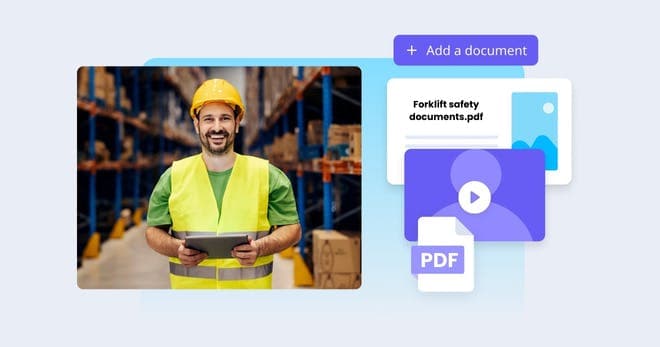
Keep standard operating procedures and other vital documents easily accessible using the platform’s in-house file storage briefcase. This way, your crew members can cross-reference protocols instantly without carrying around folders. And if you want to teach these documents, simply turn them into courses using the software’s AI converter.
Easily assess and track training progress and improvements with Mitti’s blended learning feature. It’s an all-in-one tool for recording completions and checklisting skills, eliminating the need for multiple sheets. You can even document these assessments with certificates, making audit trailing a breeze.