OSHA forklift training requirements: A guide

Forklifts are among the most common pieces of industrial equipment found in production sites. However, in unqualified hands, they can pose significant hazards, leading to accidents, injuries, and fatalities. This highlights the necessity for strict training requirements.
In this article, we’ll guide you through the Occupational Safety and Health Administration (OSHA) forklift training regulations. We’ll cover key expectations, standards, benefits, and solutions to help you secure compliance and promote excellence in forklift operation.
Forklift training is a specialized course that teaches operators how to use and manage a powered industrial truck (PIT) effectively. It certifies a driver’s ability to operate a forklift safely and legally by imparting the essential skills and knowledge needed to handle the vehicle.
Forklift driver training covers key handling methods, maneuvering techniques, risk assessments, maintenance routines, and safety protocols relevant to PITs. Whether in a manufacturing plant, warehouse facility, or construction site, this course helps forklift operators comply with regulations.
Mitti (by SafetyCulture) offers reliable automated compliance solutions that carry the challenges of frontline training management for you. The platform delivers everything you need to create, track, and assess employee induction and improvement programs seamlessly.
OSHA’s forklift training requirements establish the criteria for implementing comprehensive, practical, and compliant courses. Meeting these standards makes sure operators are well-equipped and properly evaluated to use forklifts correctly.
Below is an overview of 29 CFR 1910.178(l), outlining the expectations, methods, topics, and deadlines for operator training.
Employers must organize and deliver training and certification for every forklift operator. The courses they offer should satisfy OSHA regulations related to PITs, following the safety procedures and proper practices specified in the code.
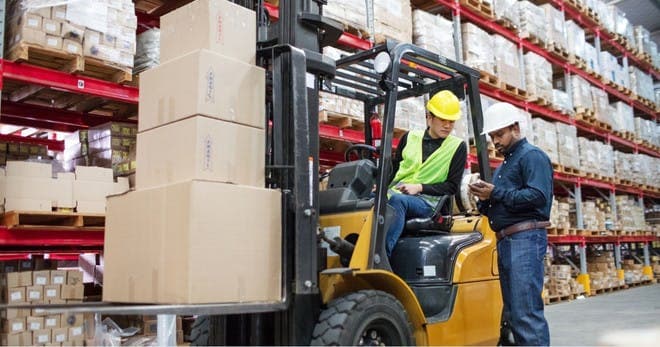
Additionally, employers are required to train and assess their forklift drivers according to the specific type of truck they will use. This helps operators to implement safeguarding techniques that align with their vehicle and work environment.
However, keep in mind that there is a small exception:
If an operator has received prior training that meets the requirements for their truck type and working conditions and demonstrates competence in their evaluation, no additional training is necessary.
Truck driver training and assessment can only be facilitated by individuals with the expertise and experience to instruct trainees. In connection, these qualified trainers are the only ones who can permit and directly supervise learners to operate a PIT during training.
OSHA requires employers to implement a combination of various training techniques that allow forklift operators to gain enough knowledge and hands-on experience.
The methods used during training must include all of the following:
Formal: This can be classroom discussions, lectures, multimedia presentations, or online courses that effectively cover the theoretical concepts of forklift operations.
Practical: You must incorporate hands-on training, demonstrations, and operating exercises to give trainees firsthand experience of the truck and working conditions.
Evaluation: Training and certification won’t be complete without a comprehensive practical assessment of the operator’s abilities. This should cover driving maneuvers, load movements, safety checks, and scenario response.
Operators can be certified after passing their forklift safety training and skill evaluation. Forklift certification not only verifies an employee’s ability to manage PITs properly, but it also serves as their sole permit and authorization to use the vehicle in the workplace.
However, OSHA doesn’t issue any official or formal certifications for forklift drivers. Instead, the organization expects employers to certify their truck operators with complete documentation and an audit trail. Given certificates must include:
The trained operator's name
The duration of the training sessions
The completion date of the evaluation
The names of the trainer and evaluator
A driver's skills and knowledge of vital forklift concepts and practices must be reevaluated every three years. This reevaluation is required regardless of the operator’s performance, feedback, or work history. Even in the absence of past accidents or unsafe behavior, crew members must undergo reassessment.
Forklift refresher training should be delivered to the driver in the following scenarios to maintain the safety, compliance, and effectiveness of PIT operations:

After the crew member failed their reevaluation
After the operator was observed to use the truck irresponsibly, such as speeding, poor load management, and missing safety checks
After the driver was involved in a forklift incident or near miss, including collisions, overturns, and pedestrian strikes
Once the employee is reassigned to a new type of truck. For example, moving a driver from an Electric Hand Truck to an Electric Aisle Truck
Once the work site experiences changes in conditions that could affect forklift tasks. These changes could be new layouts, surface characteristics, and traffic patterns
It’s also worth noting that the refresher given must cover topics relevant to the situation that necessitated retraining.
OSHA specified various forklift principles, techniques, conditions, and processes that operators must be trained in. These topics are as follows:
Operating instructions, cautions, and safety tips relevant to the type of truck that the operator will use
The difference between powered industrial trucks and common road vehicles, including steering systems, center of gravity, and visibility
Forklift controls, gauges, panels, and interfaces
Engine or motor functions
Steering and maneuvering techniques
Operator visibility from the cab, especially during load movements
Vehicle limitations in terms of capacity and stability
Required vehicle inspections and services
Refuelling or battery charging
The operator’s manual for the specific truck that will be used
Discussions, demonstrations, and assessments on these topics should be tailored to your site’s environment
Operating surface quality, characteristics, traction, and stability
Load types, contents, and stability
Load handling, stacking, and unstacking
Pedestrian traffic
Narrow and other restrictive areas
Hazardous work areas
Ramps and angled surfaces that could affect maneuvers, clearance, and security
Enclosed environments and poorly ventilated places where the truck can cause exhaust or carbon monoxide buildup
The unique risks and hazards present in your workplace
Fulfilling OSHA forklift training standards significantly increases the reliability and trust of your business functions involving forklift tasks. This is especially critical for those in the manufacturing, warehousing, retail, and construction industries.
Let’s explore how:
Forklift safety statistics reveal that 70% of forklift incidents could’ve been avoided. Compliant training programs promote practices and behavior that prevent major injuries and fatalities from accidents.
Well-trained and certified operators understand PIT regulations and know how to apply them. Satisfying OSHA forklift training requirements proves your commitment to federal codes. As a result, your organization is much less prone to violations and their consequences of fines, limitations, and interventions.
Skilled and compliant forklift drivers can complete load movements, maneuvers, and checks with good efficiency and accuracy. This lends to smoother, more productive operations that create commendable output without compromises.
By developing responsible and dependable PIT operators, your organization can minimize wear and damage to vehicles. This prolongs the service life of forklifts and reduces costly downtime due to unforeseen repairs.
Drivers feel more confident in their jobs when they’re well-supported through proper training and development. Plus, a lower number of forklift accidents cultivates a positive working environment. Because of this, teams are more engaged and motivated.
With numerous OSHA forklift training requirements, it's easy to feel overwhelmed and lose track of important details, especially if you’re in a large organization. However, Mitti (by SafetyCulture) has the tools to support you every step of the way, fostering compliance and operational excellence without requiring additional effort.

Discover what we offer for comprehensive and exceptional forklift training:
Vetted training material: Our Powered Industrial Trucks (US) has been reviewed and approved by the American Society of Safety Professionals. It covers truck types, hazard management, and proper operation, making it a great resource.
Blended learning support: The platform’s blended learning features allow you to combine in-person discussions, online courses, and hands-on demonstrations. You can track attendance, record feedback, and deliver materials in one convenient software.
Digitized skill evaluation: Ditch the clipboards, sheets, and folders with Mitti’s practical assessments tool. With the evaluation feature, you can customize checklists, drop boxes, and answer sheets to standardize assessments and maintain quality.
Completion documentation: Create, reward, and store certificates all within the app using our completion certificate feature. Capture all necessary audit details and easily access them in a centralized storage system.