10 warehouse safety best practices
Warehouse safety is an integral component of industrial operations, and it should be treated as more than just a regulatory and industry obligation. The effectiveness of your safety systems, measures, and procedures not only affects the well-being of your workers. It also dictates the efficiency and productivity of your operations.
To help you better safeguard employees while enhancing output, we’ll break down 10 warehouse safety best practices. We’ll explore the importance of each approach for your warehouse and offer tips and techniques for effective implementation.
Our recommendations follow the safety requirements for general industries made by the Occupational Safety and Health Administration (OSHA) under 29 CFR 1910. We’ve also incorporated well-established warehousing insights aimed at manufacturing, logistics, and retail.
This way, your teams remain secure while complying with standards and committing to operational excellence.
Warehouses contain heavy loads, powered trucks, lifting systems, hazardous substances, and other similar objects and equipment that pose major risks to workers. Crew members work with and around these materials and mechanisms daily, placing them in compromising situations if not given the proper knowledge and guidance.

Regular warehouse safety training is essential for your safety program. It teaches and refreshes teams on how to perform their tasks correctly while considering their health and the wellness of others.
Create safety courses tailored to the responsibilities of each employee. For example, warehouse management training for team leads and pallet stacking safety lessons for associates.
Incorporate classroom discussions and hands-on exercises
Conduct work practice evaluations and retrain based on points for improvement
Hold warehouse safety meetings to address specific risks or procedures
Offer on-floor access to standard operating procedures (SOPs), training guides, and manuals for just-in-time learning
For truly impactful training throughout the warehouse, Mitti (by SafetyCulture) offers reliable and flexible solutions that empower workers to do the job right, always. It’s a software that lets you deliver teams the skills they need, when they need them, making excellent performance a routine.
Keeping the warehouse clean and organized greatly enhances your team’s working environment. It keeps surfaces and aisles free of slippery substances, combustible dust, and obstructive objects. From this approach alone, employees can already minimize the risk of slips, trips, falls, struck-by accidents, and fires.
Other than that, encouraging diligent housekeeping protects your workers from dangerous equipment malfunctions by consistently clearing dust and grime buildup. It also makes sure tools and equipment remain easily accessible, which reduces the likelihood of misusing hardware when the correct item can’t be found.
Implement post-work cleaning processes into standard procedures, like de-greasing forklifts and disposing of waste after unpacking products
Assign crew members for different housekeeping tasks, such as storage maintenance and spill management
Create schedules for sweeping, wiping down surfaces, vacuuming, wet cleaning, and deep cleaning
Use slip-resistant floor paints and mats
To promote thorough housekeeping, you can use this checklist template for Warehouse Hygiene and standardize your team’s cleaning practice.
With numerous forklifts moving around an indoor environment containing large racks, tight aisles, and a crowd of people, extra caution is needed. In warehouses, powered industrial trucks are more prone to tip-overs and collisions. Meanwhile, pedestrians need to stay alert to the vehicles around them to avoid being struck or crushed.
Strictly enforce forklift speed limits, clearance checks, right of way, and proper maneuvers in your warehouse safety topics for forklift driver training
Set specific lanes for forklifts and establish a separate area for pedestrians.
Divide driveways and walkways using barriers, guardrails, and kerbs
Invest in pedestrian detection and proximity alarm systems, including sirens, RFID tags and readers, and flashing beacons
Create a separate work zone for loading and unloading tasks, keeping it away from moving vehicles
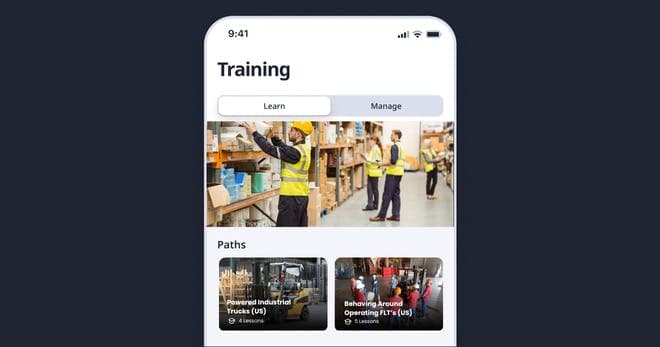
For safer forklift operations, you can add Mitti’s Powered Industrial Trucks (US) course to driver training. Meanwhile, you can help other warehouse workers improve pedestrian awareness with the platform’s Behaving Around Operating FLT's (US) lessons.
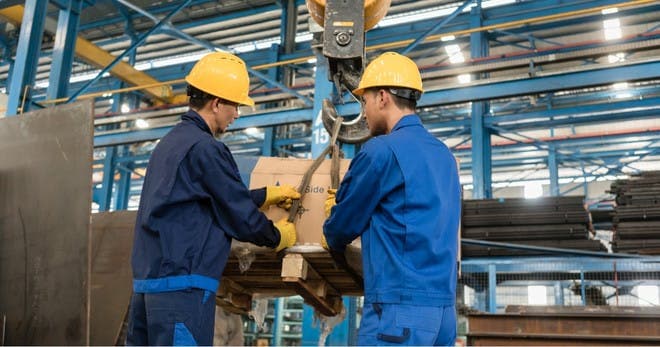
Workers such as warehouse associates, loaders, and handlers tackle the strenuous task of moving heavy loads around the facility for stacking and storage. Implementing measures and infrastructure that minimize manual lifts, carries, and relocations can significantly safeguard your team’s physical health and enhance productivity.
Additionally, safer handling standards protect the quality of your materials and prevent potentially hazardous spills and breakage.
Develop handling flow charts that detail how to handle and store materials properly based on size, composition, and weight
Maximize your racks based on your warehouse’s height
Eliminate hefty lifts and carries using material handling equipment (MHE) like automated guided vehicles, as well as jib cranes and tugger carts
Require teams to complete stable and self-supporting stacks only
Assign the heaviest items to the lowest shelves
Categorize loads and materials for better risk assessments
Recommended course for safer material handling: Pallets, Racks and Stacking Safety that explains proper storage practices and tools
Hazard control systems and safety markings serve as barriers that protect your workers from harmful exposure to risks. These measures allow them to work confidently throughout the warehouse. They decrease the likelihood of incidents like falls, crushes, strikes, and being caught between during tasks and equipment use.
Apply the hierarchy of controls wherever possible in the warehouse, such as eliminating fall hazards by installing barriers around pits
Install and maintain visible, color-coded lines to distinguish different operating zones, docking areas, pedestrian lanes, and loading/unloading sites
Post clear safety signs that warn entrants of the hazards they will encounter and the protective equipment required
Label containers and materials with the necessary warning tags.
Recommended course for your team: Warehouse Safety, which covers hazard awareness and proper equipment handling
Even with enough safeguards and hazard controls, your workers can still be at risk of serious injuries and fatalities if they don’t use the right personal protective equipment. Crew members need to recognize that different types of safety gear are required for various tasks, particularly in the complex environment of warehousing.
For example, it’s easy for material handlers to wear any protective gloves, but the type of glove needed depends on the objects they handle. If working with sharp loads, cut-resistant gloves are essential; for operating machines, anti-vibration gloves are more suitable.
Conveyors, storage and retrieval systems, and packaging machines are some warehousing equipment that must be locked out and tagged during maintenance. However, since many procedures rely on these machines, workers who are unaware of this practice may inadvertently cause unwanted startups, resulting in incidents.
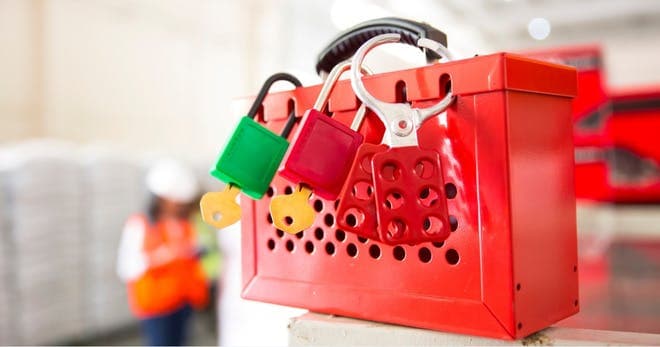
This is why emphasizing knowledge of lockout and tag-out procedures is crucial for a warehouse’s safety program. Maintenance technicians should be able to complete LOTO processes with absolute certainty. Meanwhile, non-servicing workers must understand the restrictions and symbols of these isolators.
Deliver standard operating procedures that follow the six steps of lockout/tag-out: preparation, shutdown, isolation, application, stored energy check, and verification
Incorporate visual aids for processes and the meaning of tag symbols
Increase knowledge of hazardous energy sources present in warehouses, including mechanical, electrical, and pneumatic
Recommended checklist for complete LOTO procedures: Lockout Tagout Checklist - Industry Vetted, which includes audits, shift changes, and documentation
Warehouses contain machines, electrical systems, and chemicals that can cause major emergency crises. Not only that, but facilities are often littered with wooden pallets, paper materials, and dust that are easily flammable, potentially spreading fires.
Prevention is the best solution, but in a changeable industrial environment like a warehouse, preparing for incidents and disruptions shouldn’t be ignored.
Regularly assess possible causes of unforeseen incidents, including charging stations, shelf and rack structures, trucks, debris, and work surfaces
Deliver emergency evacuation training that covers evacuation routes, crisis responsibilities, first aid, and immediate response
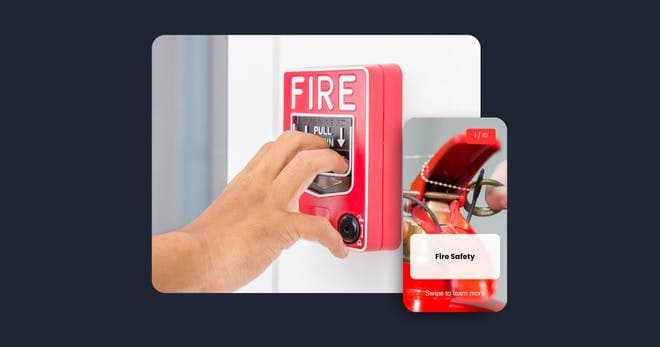
Make sure teams understand how to use extinguishers and fire alarms
Recommended course to increase your workers’ fire awareness: Fire Safety, which guides your team through fire prevention techniques and evacuation plans
A Harvard study found that high air pollution combined with poor ventilation impairs cognitive functions, including concentration, decision-making, and coordination. It revealed that increased levels of particulate matter and carbon in indoor work environments can diminish a person's productivity.
This is a cause for concern for warehousing operations. Forklifts, material handling procedures, and packaging activities create a high amount of carbon dioxide and sulfur oxides, as well as mold spores and fibers. Without proper ventilation and air cleaning, your workers are more prone to make mistakes that can lead to accidents.
Place anti-dust mats on work surfaces
Install exhaust fans near vehicle zones and material handling areas
Implement High Efficiency Particulate Air (HEPA) filters in your HVAC systems
Regularly monitor air quality and humidity
Add vehicle emissions training to your program
From small repetitive movements to intense forceful lifts, warehouse workers are at risk of long-term injuries due to the physical activities they perform daily. Incorporating safe ergonomic principles into your facility’s layout, equipment, and procedures can significantly reduce discomfort and fatigue, which protects joints and bones.
Enhance ergonomics awareness by including it in your safety topics for the warehouse during training and meetings
Include anti-vibration and shock-absorbing accessories for vehicles, especially forklifts
Equip teams with mechanical lift aids such as hoists and lifting tables
Add vibration-damping handles to handheld equipment
Invest in automation machines and robotic tools
When developing and establishing a warehouse safety program, you should aim for practicality, relevance, and sustainability. Here’s a quick guide on how to achieve this:
Conduct risk and documentation assessments: Identify the pressing safety concerns in your warehouse based on contained procedures, materials, and equipment, as well as past recorded incidents.
Implement safety systems: Apply warehouse safety best practices to your health and safety policies, procedures, measures, and training related to your identified risks.
Continuously monitor and evaluate compliance: Review your team’s application of safety inspections and practices through records and checklists.
Promote a culture of safety: Encourage workers to always prioritize their well-being through incentives, recognition, and accountability.
With Mitti’s easy-to-use, automated compliance solutions, you can effortlessly make safe and efficient practices the routine amongst workers. Using reliable tools to communicate, teach, track, and evaluate standard procedure compliance, your warehouse gets a little closer to excellence.